
What a brand session looks like for a Chicago therapist
In nearly every discovery call, the person who is considering brand photos says something like, “I am much more __________ than my current photos, and I want to change that.”
You can fill in the blank: maybe it’s funnier, maybe it’s more thoughtful, maybe it’s sarcastic, maybe it’s warmer. The bottom line is, your current photos aren’t giving off the vibe that your clients feel when they work with you.
That was the starting point for Roxanne’s brand session. Roxanne is the founder of Generational Health, a Chicago therapy practice that serves individuals and families coping with chronic and persistent mental health conditions.
Roxanne is unmistakably warm and kind within about four seconds of meeting her. But that wasn’t coming through the visuals on her website.
I’ve photographed a good number of Chicago therapy practices now, and no two have needed the same thing. A counseling office in the middle of a full rebrand needs something different than a solo practice that wants to lean into what’s is unique about their practice.
Why feelings like warmth can be difficult to capture
If your brand photos don’t make your dream clients feel the way you want them to, it’s usually not because of bad photography. You can have lovely, well-lit photos that still feel stiff and disconnected.
The main reason this usually happens is because no one ever asked the question: what feelings are your brand photos supposed to evoke for your dream clients?
In Roxanne’s case, her clients are specifically scanning for whether or not she feels like a therapist who’s safe.
So if her photos read clinical or “too professional,” it means they’re probably going to keep looking. That means making sure Roxanne’s visuals feel the same way her clients feel when they encounter her in person…is the entire point.
A cozy office in Lakeview with tea and a couch
We deliberately shot Roxanne’s entire session in her own therapy office in Chicago. Her office is warm, cozy, personal, and feels exactly like Roxanne.
On top of that, her office is the actual room her clients meet in – letting someone see it before they ever walk in makes that first appointment feel a little less like stepping off a cliff.
In fact, some of the words that appeared when I used my FRAME method to plan Roxanne’s session were: Grounded. Calming. Warm. Emotionally safe. Steady. Fun, shoes off.
So that’s where we started to plan her brand photos.
One storyline, five scenes
Instead of a list of shots, we built the whole session around a single idea: Roxanne is a grounded guide who supports clients through uncertainty.
Everything we shot had to serve that. Here’s what that looked like in practice.
Client sessions with “faceless photos.” Real clients can never appear in a therapist’s marketing, so we used models and framed every session shot from the back of the head, or hands around a mug. Faceless photos also put the viewer in the client’s seat.







The real parts of her practice. Tea. Journaling on the couch. Calming breaths. Ice on the arm to help regulate feelings. These are the images that promise real tools, which is a very different message than “a safe space to talk.”



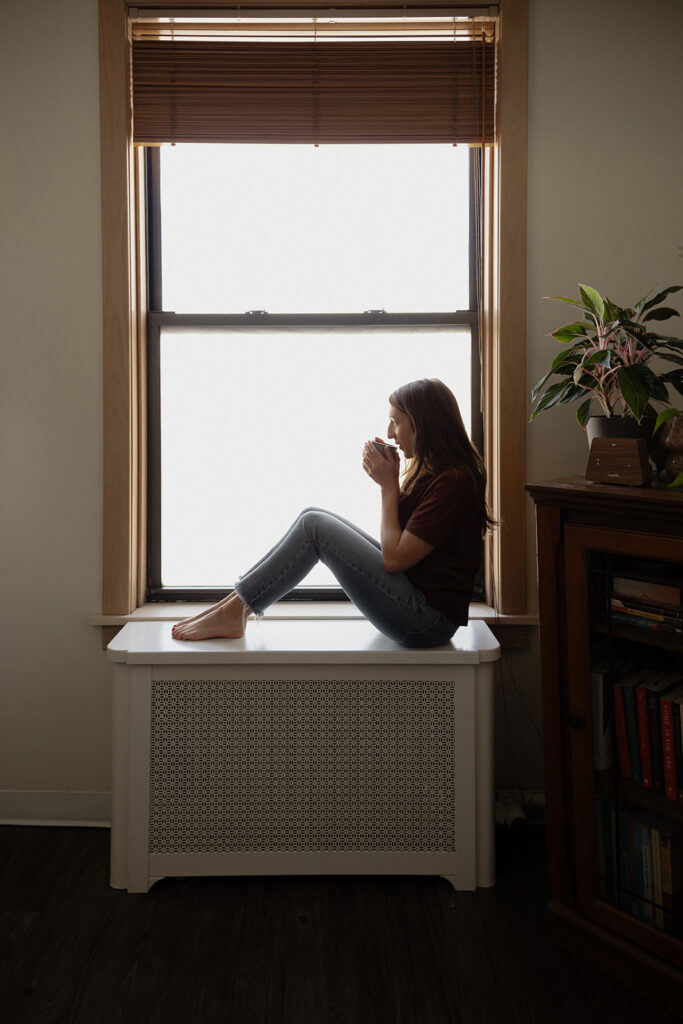




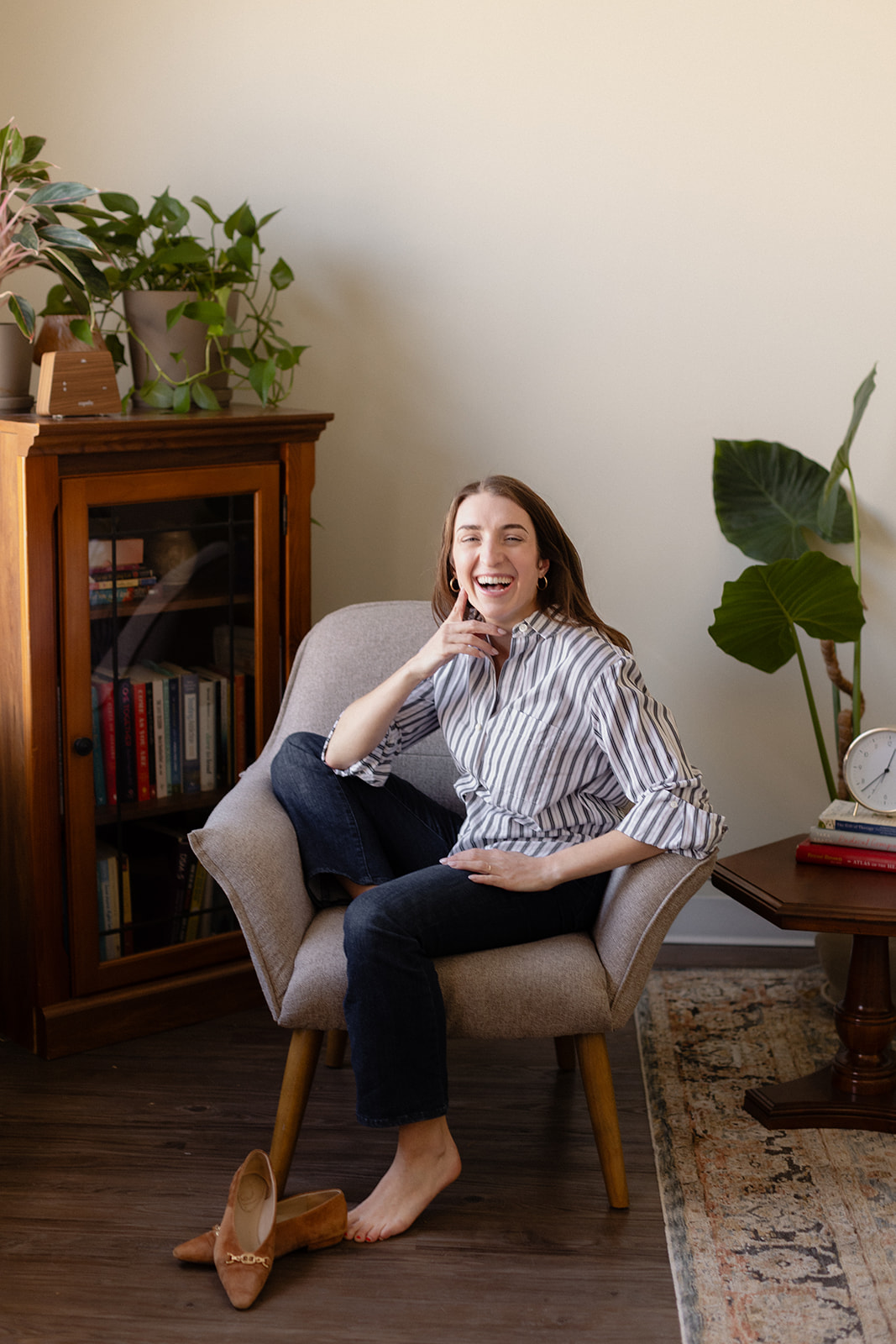
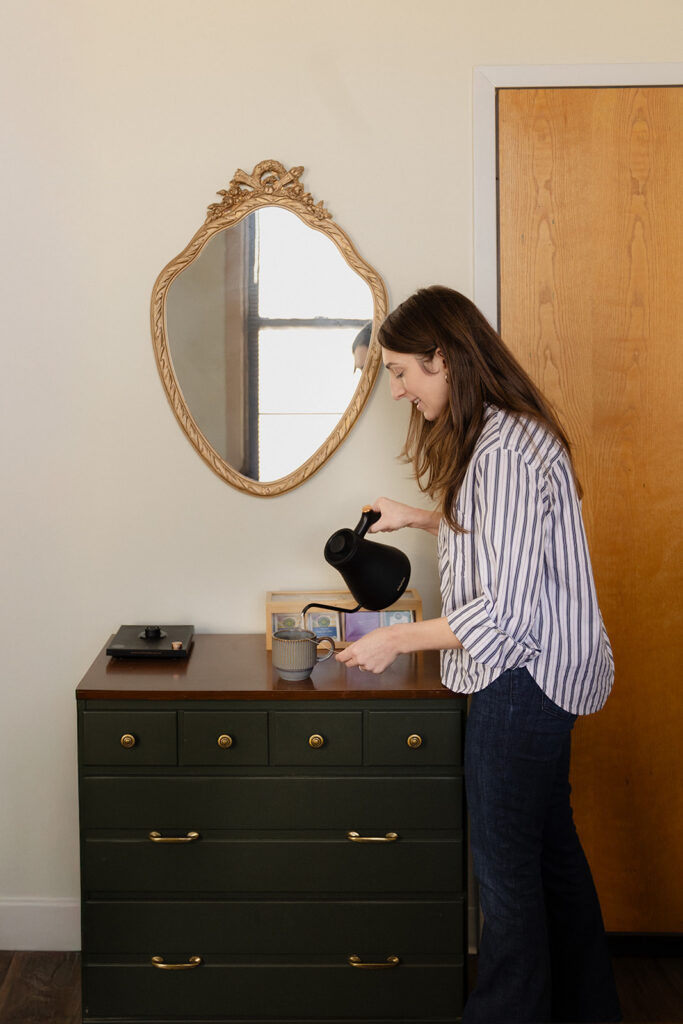
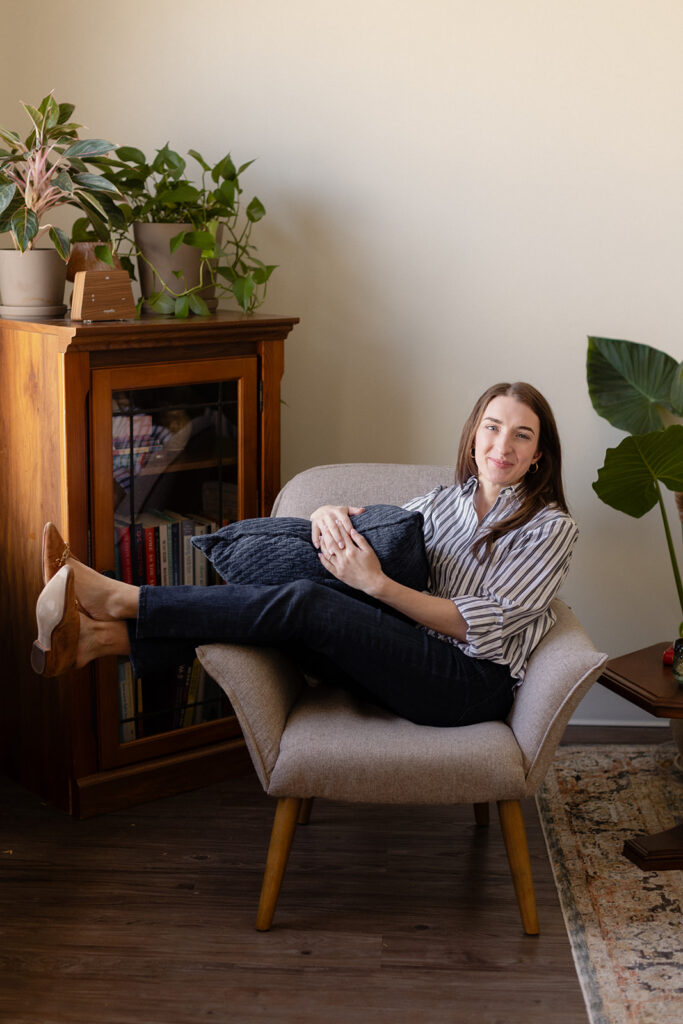
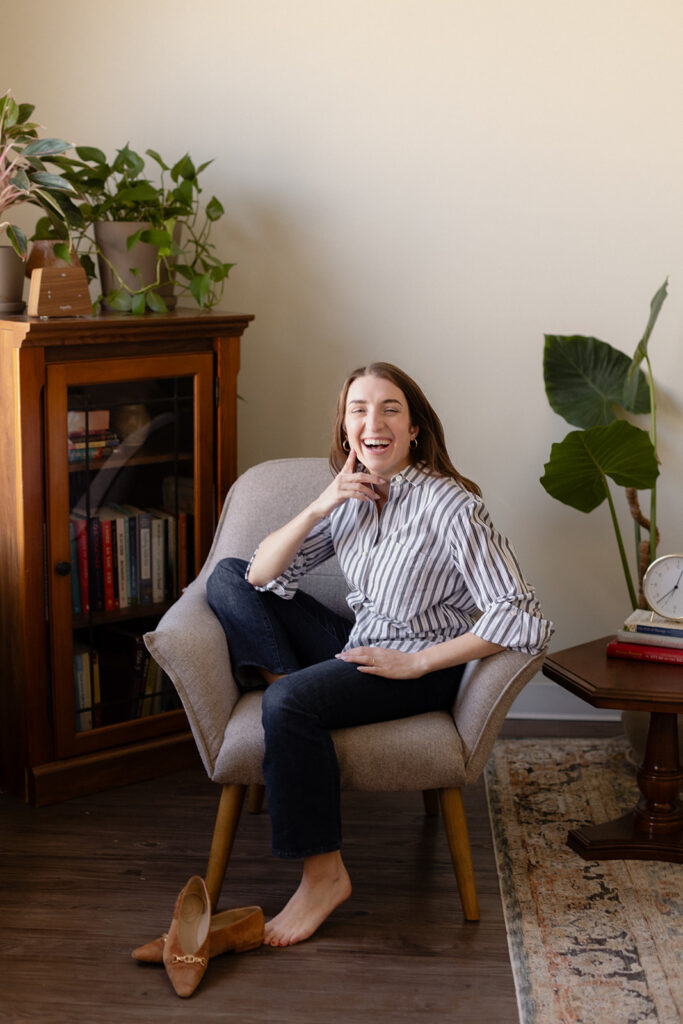
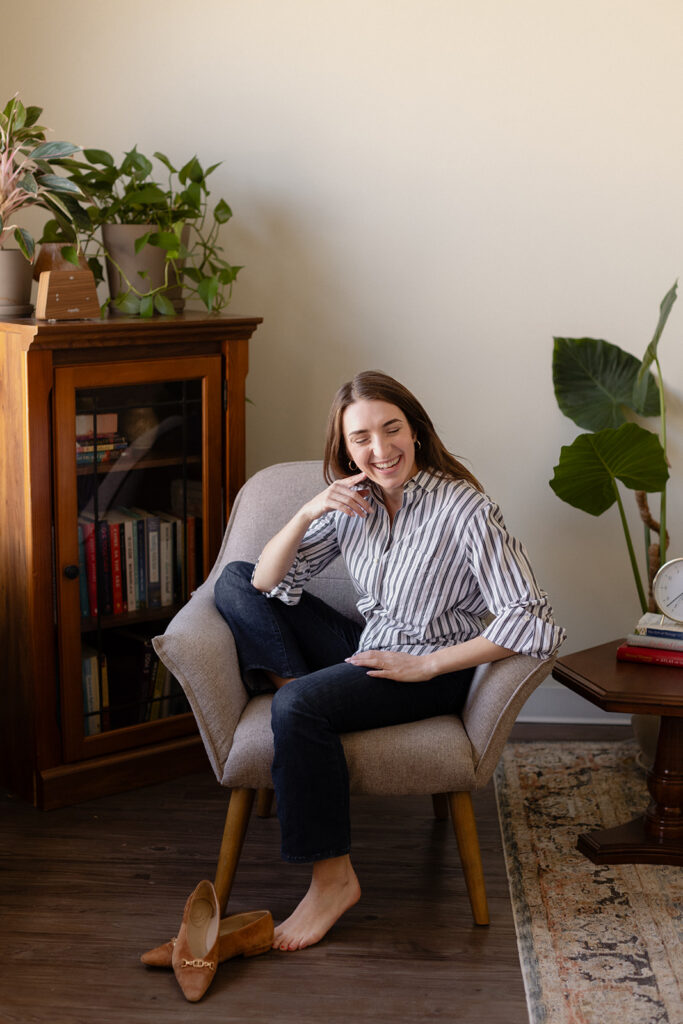
The relaxed feel of her practice. Shoes off. Reading in her windowsill. Laughing. Grabbing tea from her tea nook. These are the warmth photos, and they’re the ones doing the heaviest lifting on her site.

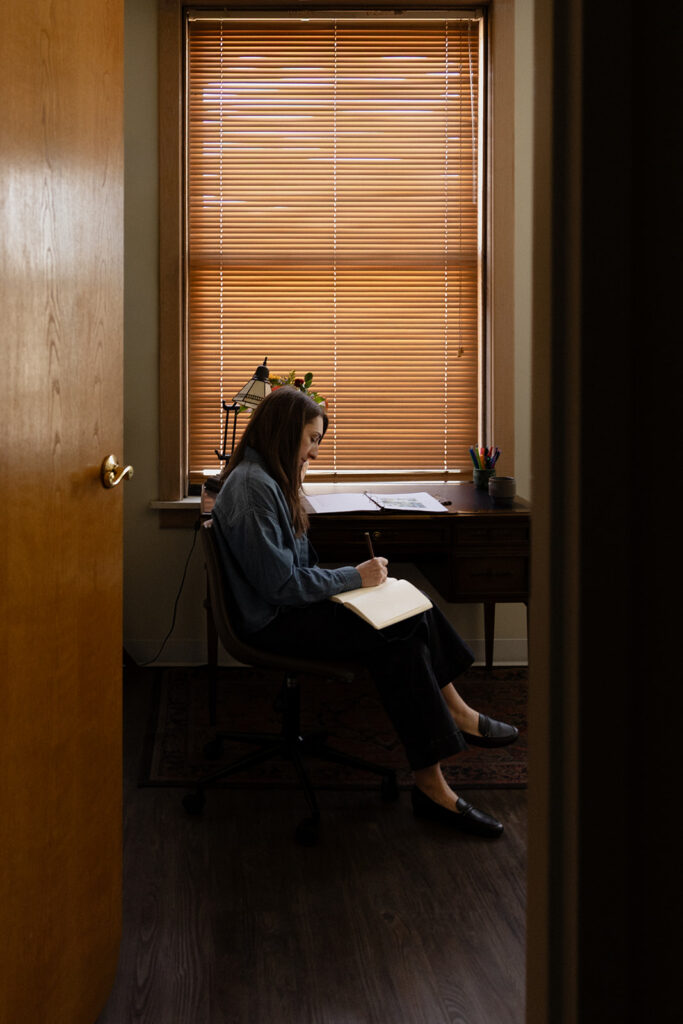
The working side. Sitting at her vintage desk, typing on her laptop, sitting next to her plants in the windowsill, curled up on her cozy green couch with vintage artwork all around. This is where she works, and we want her clients to see it.






Also, the professional stuff. We ended with professional and fun headshots, shot last on purpose. Halfway into her session, she was completely comfortable in her own space, so she looked and felt like herself.


The takeaway
Roxanne walked away with a library that works across her website, Psychology Today, LinkedIn, her individual work, and her family coaching, all pulling in the same direction. Even in a 1-hour session, her gallery provides enough photos to post consistently without rotating the same three images.
But most importantly, the photos feel like Roxanne.
If your photos aren’t giving the right vibe
What’s the word you wish your dream clients understood about you? Are you funnier, warmer, more grounded, more direct? Whatever the word is, your photos should be helping your clients feel that, and if they’re not, they’re really not doing their job.
If your visuals don’t match who you are when people encounter you in person, that could be eroding trust in you, and you could be losing out on business.
Read more HERE about why trust is the most important factor in getting your dream clients to choose you.
FAQs for therapists
What are brand photos for therapists? Therapist brand photography includes strategic images of you and your practice, planned around the feeling you want someone to have when they find you. They go past a headshot to include session-style moments, your office, and details that show how you actually work. For a therapist, the goal is usually to make booking a first appointment feel less frightening.
Can real clients appear in a therapist’s brand photos? Client confidentiality means real clients should never be used in marketing images. Session-style photos are created with models (often the therapists friends or family!), composed so the model is photographed from behind or with their face out of frame. Done well, this is more effective, because it puts the viewer in the client’s seat.
Should a therapist do brand photos in their own office? The answer depends on your office. Photographing your real office lets someone see the exact room they would be sitting in, which lowers the anxiety around a first session. However, if your office is shared, or if it’s difficult to photograph, a studio or rented home can be a better option.
What should a therapist wear for brand photos? We usually try to capture a few outfit options during a session so they go further. For most therapists that includes soft, comfortable layers in calm, neutral tones, but can also include some professional wear, or bright colors, depending on your brand. Clothing is part of the emotional signal, and people read approachability fast.
How do you get feelings to show up in brand photos? All feelings or vibes you want to convey should be planned beforehand. That means naming the feeling out loud before the session, shooting somewhere the person is genuinely comfortable, building in relaxed moments instead of only posed ones, and saving headshots for the end once you’ve settled in.
How long does a brand session for a private practice take? A full day session is recommended if you need a strong core library, with B-roll and a variety of concepts. However, a 1-hour Power Hour session can work for many therapists.
Do you photograph group practices as well as solo therapists? Yes, I love working with practices that have multiple therapists and staff. However, they usually need different things. A solo practice is building trust in one person, while a group practice brand needs to feel consistent throughout, while still letting each therapist be themselves.
Find out more about what it means to work with me.